Mídia e Performance
12 de mar. de 2026
Go back
Performance Marketing Beyond Google and Meta: Strategic Channel Diversification
Autor: Rafael Lins
Leitura estimada: 1 min
Explore how to diversify performance marketing beyond Google and Meta in 2026 with mobile apps, retail media, AI platforms, and strategic channel allocation.
Introduction
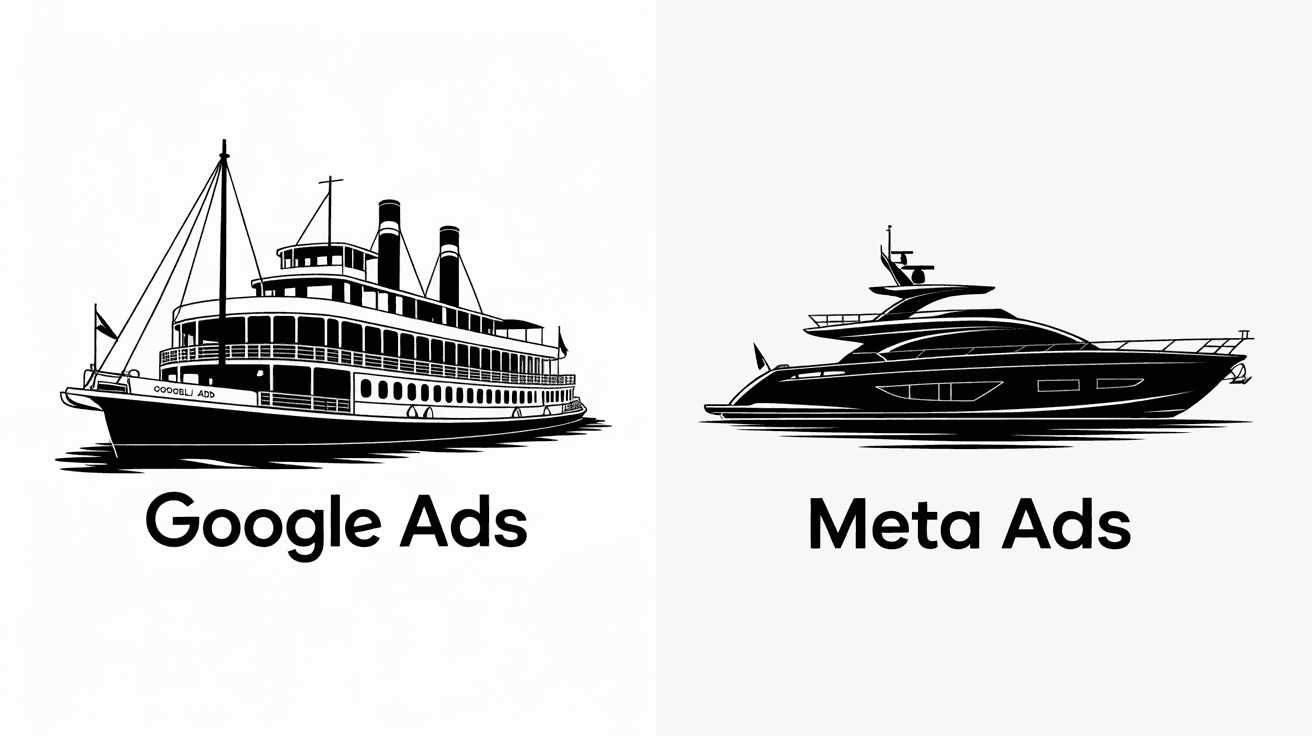
For over a decade, performance marketing has largely revolved around two ecosystems:
Google
Meta
Together, they shaped acquisition strategies, attribution models, and growth expectations.
But 2026 is accelerating a structural shift.
Relying exclusively on the duopoly is no longer a growth strategy.
It is a concentration risk.
The Duopoly Reality
Google and Meta dominate because they offer:
Massive reach
Mature optimization systems
Scalable targeting
Robust attribution tools
However, this dominance creates:
Auction inflation
Increased CPM and CPC volatility
Dependency on platform rules
Reduced incremental lift over time
When competition intensifies, cost increases are inevitable.
Why Diversification Matters Now
Three structural changes are driving diversification:
AI-powered search reshaping discovery
Growth of in-app ecosystems
Retail media expansion
Advertisers are discovering that incremental growth often lies outside traditional search and social.
Mobile App Advertising as a Growth Vector
Mobile apps represent:
High-intent environments
Contextual engagement
Lower competition niches
Scalable inventory beyond search
Programmatic mobile advertising allows brands to:
Target behavior-based audiences
Reach users in contextual environments
Capture incremental conversions
Mobile is not replacing search.
It is expanding surface area.
Retail Media Networks
Retail media platforms provide:
First-party purchase data
Closed-loop attribution
Commerce-driven targeting
For brands with physical or digital products, retail ecosystems can offer:
Higher purchase intent
Direct revenue attribution
Lower dependency on keyword auctions
This is especially relevant as privacy regulations reshape targeting models.
AI Platforms as Emerging Channels
AI-powered interfaces are becoming distribution layers.
Advertising inside:
Conversational platforms
AI-driven content hubs
Intelligent recommendation systems
creates new brand touchpoints.
These are not purely performance channels.
They blend awareness and influence.
The Strategic Allocation Model
Diversification does not mean abandoning Google or Meta.
It means:
Protecting core performance channels
Testing adjacent ecosystems
Measuring incremental lift
Allocating budget dynamically
A balanced portfolio may include:
Search (intent capture)
Social (audience activation)
Mobile app programmatic (incremental reach)
Retail media (commerce alignment)
AI-driven platforms (contextual influence)
The Role of Data Infrastructure
Diversification increases complexity.
Without strong analytics infrastructure:
Attribution becomes fragmented
Incrementality is unclear
Budget allocation decisions weaken
A diversified strategy requires:
Unified tracking
CRM integration
Conversion import
Incremental testing frameworks
Data integrity becomes a competitive advantage.
When to Diversify
Signals that indicate readiness:
Saturated CPC growth
Declining marginal ROAS
Stable brand search volume
Strong first-party data collection
Diversification works best when foundational channels are already optimized.
Risk vs Opportunity
Remaining inside the duopoly:
Offers predictability
Limits innovation
Increases exposure to auction inflation
Diversifying strategically:
Unlocks incremental audiences
Reduces dependency
Builds resilience
In volatile markets, resilience matters.
Conclusion
Performance marketing in 2026 is no longer about maximizing a single channel.
It is about orchestrating an ecosystem.
Google and Meta remain central.
But the next layer of growth lies beyond them.
Brands that diversify intelligently — supported by strong technical infrastructure — will build sustainable acquisition engines.
Those who remain concentrated may face diminishing returns.




Go back